

Last updated: November 2026
Disclosure: We may earn a commission if you use some links on this page, at no extra cost to you.
The short answer: There is no single best place to live in Montana — there is a best place for your budget and your life. If you want the fullest package of jobs, amenities and mountain access and can pay for it, it’s Bozeman. If you want that package at roughly $160,000 less per house, it’s Missoula. The best value in the state is Helena: a capital-city job market at close to the statewide typical home price. The cheapest doors in Montana are in Butte and Great Falls, and the most beautiful — and most expensive — are in Whitefish. Every pick below is backed by the same numbers, so you can check our work.
Our top picks at a glance:
- Best overall: Bozeman
- Best value for money: Helena
- Best for families: Bozeman (budget alternative: Billings)
- Best for retirees: Helena
- Best on a budget: Butte
- Best for outdoor access: Whitefish (budget alternative: Livingston)
- Best for jobs: Billings (most diverse economy) and Bozeman (highest incomes)
This article is general information, not tax, legal, or financial advice. Prices, rates and tax rules change. Check the linked sources or a qualified professional for your own situation.
The short version
- Best overall: Bozeman – typical home $721,678 and the highest median household income on the list, $85,747.
- Best value: Helena – typical home $477,974, close to the statewide typical $467,275.
- Missoula offers a similar package for about $160,000 less per house than Bozeman, at $563,970.
- Cheapest doors: Butte at $286,353, then Great Falls at $337,936.
- Most expensive: Whitefish at $870,463 – about three times a typical Butte home.
The Montana towns, compared
Typical home values and asking rents are Zillow’s September 2026 figures; incomes are Census Bureau survey averages (ACS 2020–2024) and trail the current market; populations are Census Bureau July 1, 2025 estimates.
| Town | Population (2025) | Typical home value (Zillow, Sept. 2026) | Typical asking rent (Zillow, Sept. 2026) | Median household income (Census ACS 2020–2024) |
|---|---|---|---|---|
| Whitefish | 9,358 | $870,463 | $2,790 | $73,811 |
| Bozeman | 58,814 | $721,678 | $2,199 | $85,747 |
| Missoula | 78,903 | $563,970 | $1,622 | $70,392 |
| Kalispell | 31,851 | $556,201 | $1,888 | $63,415 |
| Livingston | 9,290 | $533,000 | $1,473 | $65,861 |
| Helena | 35,138 | $477,974 | $1,630 | $71,036 |
| Billings | 121,239 | $401,071 | $1,393 | $73,712 |
| Great Falls | 60,208 | $337,936 | $1,433 | $63,373 |
| Butte | 35,469 | $286,353 | $1,443 | $61,857 |
| Montana (state) | 1,144,694 | $467,275 | — | $72,509 |
Sources: Zillow Research (ZHVI and ZORI, all unit sizes, Sept. 30, 2026) via Montana Wayfinder’s Moving to Montana 2027 guide and cost-of-living pages; U.S. Census Bureau QuickFacts (ACS 2020–2024) and Vintage 2025 population estimates. Livingston’s Zillow figures are via Home Economics ProMap reading the same Zillow Research Sept. 2026 city data (accessed Nov. 22, 2026; home value rounded to the nearest $1,000 as reported). Zillow’s typical value is not a median sale price.
Two things jump out of the table. First, the spread: a typical Whitefish home costs about three times a typical Butte home ($870,463 vs. $286,353). Second, incomes do not rise as fast as house prices — Bozeman is the exception, with both the second-highest prices and by far the highest median household income ($85,747).
How to read this list
Montana towns trade off the same four things: housing cost, jobs, amenities, and access to the outdoors. Every town below is scored on the numbers above, plus the things numbers miss — winters, wind, tourists, and how a place actually feels to live in year-round. Where we make a judgment call, we say so. Where a town is wrong for most people, we say that too.
Short on time? Our Montana Town Finder matches you to a town in five questions.
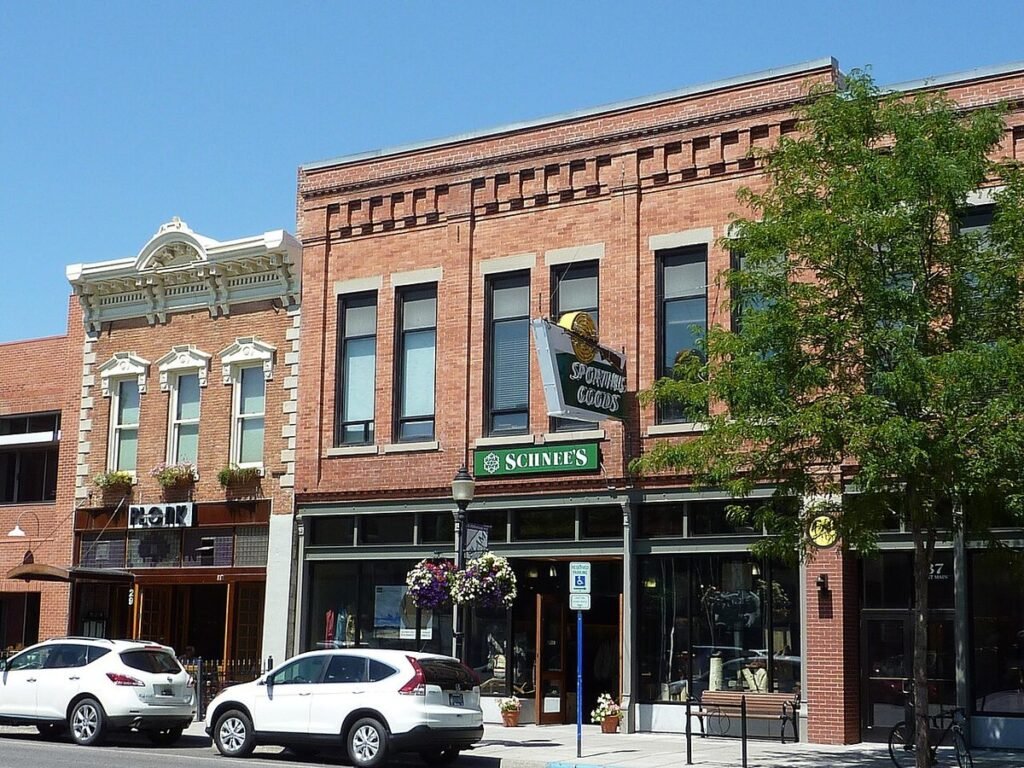
1. Bozeman — best overall, if you can afford it
The numbers: Population 58,814 · Typical home $721,678 · Typical rent $2,199 · Median household income $85,747.
Bozeman is the default answer for a reason. Montana State University, the state’s strongest job market, the highest household incomes in Montana, a real airport, and Bridger Bowl and Big Sky on the doorstep. It is also the second-most-expensive town on this list, and the growth shows — traffic and new subdivisions are the local complaint. If your income travels with you (remote work, a business, a Bozeman job offer), no Montana town offers more. If it doesn’t, the same money buys a bigger life almost anywhere else in the state.
Read next: Cost of living in Bozeman · Bozeman town guide
2. Missoula — the full package at $160,000 less
The numbers: Population 78,903 · Typical home $563,970 · Typical rent $1,622 · Median household income $70,392.
Missoula is Montana’s culture town — the University of Montana, a real downtown, music, food, and three rivers running through it. The surprise in the data: its typical asking rent ($1,622) is essentially the same as Helena’s and far below Bozeman’s ($2,199), even though buying costs more than Helena. For renters, Missoula is the best deal in western Montana. For buyers, you pay a premium for the lifestyle — but it’s a proven one, and the job market (healthcare, the university, remote workers) is deeper than Helena’s or the Flathead’s.
Read next: Cost of living in Missoula · Missoula town guide
3. Helena — the best value in Montana
The numbers: Population 35,138 · Typical home $477,974 · Typical rent $1,630 · Median household income $71,036.
Our pick for best value, and it isn’t close. Helena’s typical home is about $244,000 less than Bozeman’s and $86,000 less than Missoula’s, while its median household income is higher than Missoula’s — because the state capital runs on government, healthcare and professional jobs that don’t disappear in a downturn. Helena also has the highest median wage of Montana’s metro areas ($55,040 a year, BLS, May 2025). You give up a big-city feel and a university scene; you get a historic downtown, trailheads minutes away, and a housing market a median income can actually reach.
Read next: Cost of living in Helena · Helena town guide
4. Billings — best for jobs, and the big-city option
The numbers: Population 121,239 · Typical home $401,071 · Typical rent $1,393 · Median household income $73,712.
Billings is Montana’s largest city and its economic engine — the most diverse job market in the state (healthcare, energy, agriculture, logistics, finance) at a typical home value 14% below the state figure and barely half of Bozeman’s. The trade-off is scenery and feel: it’s a working plains city under the Rimrocks, not a mountain town, and summers are hot. For families who need two incomes, career ladders and affordable houses more than they need a ski hill, Billings is the practical #1 — and its median household income ($73,712) is the highest on this list after Bozeman.
Read next: Cost of living in Billings · Billings town guide
5. Whitefish — the most beautiful, and the most expensive
The numbers: Population 9,358 · Typical home $870,463 · Typical rent $2,790 · Median household income $73,811.
Whitefish is what people picture when they picture Montana: a ski town on a lake, 30 minutes from Glacier National Park. It is also the most expensive of Montana’s main towns — a typical home at $870,463, and a typical asking rent of $2,790 that eats nearly half the median household income. The honest framing: Whitefish is a wonderful place to live if your income doesn’t depend on living there. Local wages don’t support local prices; remote income, a business, or equity from a house sale somewhere else does. If that’s you, nothing in Montana beats it. If it isn’t, look 15 miles south.
Read next: Cost of living in Whitefish · Whitefish town guide
6. Kalispell and the Flathead — Whitefish’s backyard at $314,000 less
The numbers: Population 31,851 · Typical home $556,201 · Typical rent $1,888 · Median household income $63,415.
Kalispell is the Flathead Valley’s working hub: the regional hospital, the shopping, the services — and Flathead Lake and Glacier both within easy reach. A typical home runs about $314,000 less than Whitefish, which is why so many people who “live in Whitefish” actually live in the Flathead. Two cautions from the numbers: asking rents are oddly high ($1,888, above Missoula’s) because so much rental stock has gone to short-term lets, and the median household income ($63,415) is the second-lowest on this list. Bring your income or land a healthcare or trades job; don’t count on resort wages covering resort-adjacent rent.
Read next: Cost of living in Kalispell and the Flathead · Kalispell town guide
7. Livingston — the Yellowstone gateway with a soul
The numbers: Population 9,290 · Typical home $533,000 · Typical asking rent $1,473 · Median household income $65,861.
Livingston is a historic railroad town on the Yellowstone River, 55 miles from Yellowstone’s north entrance — and the small town on this list we’d point artists, writers, anglers and remote workers at first. It has a real main street, a creative scene out of proportion to its size, and Paradise Valley as its backyard. The warnings are real too: the wind is famous for a reason, the job market is thin, and prices have been pulled up toward Bozeman levels by second-home buyers, so it is no longer the cheap alternative it was a decade ago.
Read next: Livingston town guide
8. Great Falls — the affordable city nobody puts on lists
The numbers: Population 60,208 · Typical home $337,936 · Typical rent $1,433 · Median household income $63,373.
Great Falls is Montana’s overlooked city: a typical home at $337,936 — the second-cheapest on this list — with a full set of city services, Malmstrom Air Force Base anchoring the economy, and the Missouri River running through town. It’s also the one large Montana city whose population slightly shrank between 2020 and 2025 (–0.5%), which is exactly why it’s affordable. The trade-offs are wind, cold, and a downtown still finding its feet. For a first home on a Montana salary, or a military household PCS-ing to Malmstrom, it’s the easiest math in the state.
Read next: Great Falls town guide
9. Butte — the cheapest door in Montana
The numbers: Population 35,469 · Typical home $286,353 · Typical rent $1,443 · Median household income $61,857.
Butte is our budget pick: the lowest typical home value of any main Montana town ($286,353), a mile-high historic mining city with more character per dollar than anywhere else in the state, and Montana Tech for jobs and energy. The honest caveats: its median household income is the lowest on this list ($61,857), the winters at 5,500+ feet are serious, and the housing stock is old — cheap houses can come with expensive problems, so inspection money is well spent here. For remote workers and buyers priced out of everywhere else in western Montana, Butte is the way in.
Read next: Butte town guide
Best places to live in Montana for…
Families: Bozeman — or Billings on a budget. Bozeman pairs the state’s highest household incomes with its most in-demand schools and amenities; if the $721,678 typical home doesn’t work, Billings offers the same “real city” package — jobs, healthcare, activities — at $401,071.
Retirees: Helena. Stable government-and-healthcare economy, the state’s best value housing among full-service towns, a walkable historic core, and top-tier hospital care for its size — without resort-town prices or resort-town summers. Runners-up: Billings for medical depth, Kalispell for lakes-and-mountains scenery.
Budget: Butte, then Great Falls. The only two main towns where a typical home is under $340,000. Butte wins on price and character; Great Falls wins on city services and a larger job base.
Outdoor access: Whitefish — or Livingston on a real-world income. Glacier National Park and Whitefish Mountain Resort make Whitefish the outdoor capital; Livingston puts Yellowstone, the Yellowstone River and Paradise Valley in play at roughly $340,000 less per typical home.
Jobs: Billings for breadth, Bozeman for pay. Billings has the most diverse economy in Montana; Bozeman has the highest incomes ($85,747 median household) and Helena the highest median wage ($55,040, BLS May 2025) plus the stability of state government.
Young adults and remote workers: Missoula. The deepest rental market relative to price ($1,622 typical asking rent), a university town’s social life, and culture the other towns can’t match. Bring the remote job — local wages lag local rents.
Ready to run your own numbers?
Every town above has a full cost-of-living breakdown on Montana Wayfinder — home prices, rents, taxes (from actual county tax bills), utilities and the income you’d need:
- Cost of living in Bozeman
- Cost of living in Missoula
- Cost of living in Billings
- Cost of living in Helena
- Cost of living in Kalispell and the Flathead
And if you’re planning the move itself, start with the full guide: Moving to Montana in 2027: Costs, Best Towns & Timeline — https://montanawayfinder.com/moving-to-montana-2027/
FAQ
What is the best place to live in Montana overall?
For most people, Bozeman — the strongest job market, highest incomes and fullest amenities. If Bozeman’s prices ($721,678 typical home) don’t fit, Missoula offers a similar package for about $160,000 less, and Helena is the state’s best value.
What is the cheapest place to live in Montana?
Of the main towns, Butte — a typical home value of $286,353 (Zillow, Sept. 2026), the lowest in the state. Great Falls ($337,936) is the cheapest full-size city. Smaller towns and eastern Montana run cheaper still, with thinner job markets to match.
What is the best place to live in Montana for families?
Bozeman for schools, amenities and incomes; Billings if you need the same city infrastructure at roughly half the housing cost.
What is the best place to retire in Montana?
Helena — affordable-by-Montana-standards housing, strong healthcare for its size, a stable economy and no resort-town premium. Billings suits retirees who want the deepest medical services in the state.
Where do young adults and remote workers fit best?
Missoula. Its typical asking rent ($1,622) is far below Bozeman’s ($2,199), and its university-town culture is the state’s liveliest. Just bring remote income if you can — local wages trail rents.
Is it better to live near Glacier or Yellowstone?
For daily life, the Glacier side (Whitefish/Kalispell) has the deeper year-round economy and a ski resort; the Yellowstone side (Livingston, Gardiner area) is smaller, windier and more seasonal. Both are premium priced because of the parks.
How much income do you need to live comfortably in Montana?
It depends entirely on the town: a median household income reaches much further in Helena ($71,036 against a $477,974 typical home) than in Whitefish ($73,811 against $870,463). Our town cost-of-living pages (linked above) work the full budget for each town.
Keep planning your Montana trip
Keep researching your move with these guides.
Get the free Montana Wayfinder Letter at montanawayfinder.com for Montana trip ideas, small-town guides and cost-of-living updates.
Sources
- Zillow Research, ZHVI (typical home value) and ZORI (typical asking rent, all unit sizes), Sept. 30, 2026 — via Montana Wayfinder, Moving to Montana in 2027 (https://montanawayfinder.com/moving-to-montana-2027/) and the Bozeman / Helena / Whitefish cost-of-living pages.
- U.S. Census Bureau QuickFacts, ACS 2020–2024 (median household income) and Vintage 2025 population estimates, July 1, 2025.
- BLS OEWS, May 2025 (Helena metro median wage $55,040) — via Montana Wayfinder Helena cost-of-living research.
- Livingston Zillow ZHVI (≈$533,000) and ZORI ($1,473), Sept. 2026, via Home Economics ProMap (accessed Nov. 22, 2026). The earlier costoflivingdata.com figures ($509,476 / $1,783, page updated April 2026) are an older Zillow vintage and were replaced.